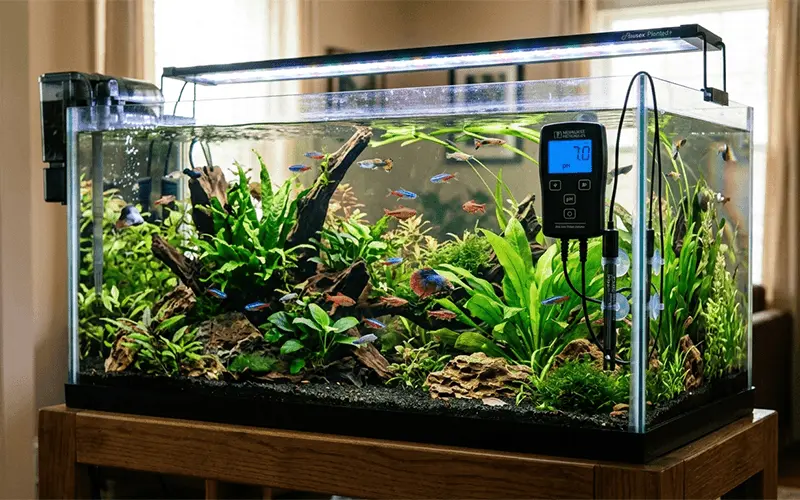
Maintaining proper pH in an aquarium is crucial for the health of your fish, plants, and overall ecosystem. High pH levels can stress fish, inhibit plant growth, and cause imbalances in water chemistry. This guide will teach you how to lower pH in aquarium safely, common causes of high pH, and methods to keep your tank stable and healthy.
What Is the Ideal pH for an Aquarium?
The ideal pH depends on the type of aquarium:
-
Freshwater tropical fish: 6.5 – 7.5
-
Freshwater plants and community tanks: 6.8 – 7.2
-
Saltwater aquariums: 8.1 – 8.4
A pH above the recommended range can lead to stress, poor growth, and reduced immunity in fish.
Common Causes of High pH in an Aquarium
Before lowering pH, it’s important to understand why it’s high. Some common causes include:
1. Hard Water
Aquariums with hard water contain high levels of calcium and magnesium, which increase pH.
2. Overuse of Buffers
Excessive pH or alkalinity buffers can raise pH above safe levels.
3. Algae Growth
Algae consume CO₂ during photosynthesis, reducing acidity and increasing pH.
4. Poor Water Changes
Old water or improperly prepared water may increase pH over time.
5. High Aeration
Excessive surface agitation can remove CO₂ too quickly, leading to higher pH.
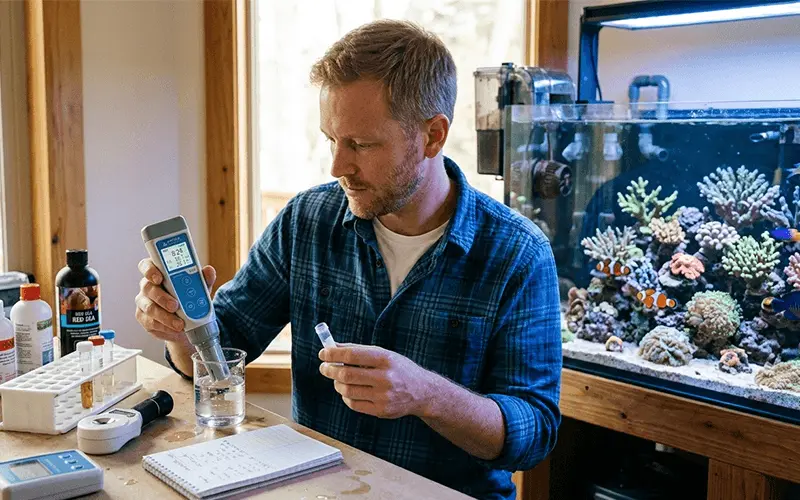
How to Test pH in Your Aquarium
Accurately testing pH is the first step in correction:
-
Liquid test kits: Reliable and easy to read
-
Digital pH meters: Precise, ideal for sensitive aquariums
-
Test strips: Quick and convenient for regular checks
Tip: Test at the same time each day to track pH fluctuations naturally caused by photosynthesis and fish activity.
Safe Ways to Lower pH in an Aquarium
There are several effective ways to lower pH without harming fish or plants.
1. Use Peat Moss
Peat naturally acidifies water by releasing tannic and humic acids.
-
Place peat in a mesh bag in filter or canister
-
Slowly decreases pH over several days
-
Also adds a natural light brown tint, safe for most freshwater aquariums
2. Add Driftwood
Driftwood releases tannins slowly, lowering pH naturally.
-
Place clean, aquarium-safe driftwood in tank
-
Works well for community and blackwater aquariums
-
Creates a natural habitat and reduces stress in fish
3. Use Reverse Osmosis (RO) Water
Mixing RO water with tap water can lower pH and soften hard water.
-
RO water has almost zero minerals, ideal for pH adjustment
-
Gradually replace tank water with RO water to avoid sudden pH drops
4. Reduce Aeration
Excessive aeration can remove CO₂, increasing pH.
-
Reduce surface agitation slightly
-
Allow CO₂ levels to balance naturally
-
Monitor fish oxygen levels carefully
5. Use Chemical pH Reducers
Commercial products are designed to lower pH quickly.
-
Always follow the manufacturer’s instructions
-
Avoid rapid pH drops, which stress fish
-
Combine with gradual monitoring
6. Increase CO₂ Levels (For Planted Tanks)
CO₂ naturally lowers pH in freshwater planted aquariums.
-
Use a CO₂ injection system or liquid carbon supplement
-
Monitor pH daily to avoid drastic swings
-
Ideal for planted tropical tanks
7. Perform Partial Water Changes
Replace high pH water with water of lower pH.
-
Use properly conditioned or RO water
-
Change 10–20% weekly for gradual adjustment
-
Improves overall water quality simultaneously
Signs Your Aquarium pH Is Too High
-
Fish show stress or erratic swimming
-
Plant leaves yellow or curl
-
Algae blooms increase drastically
-
Fish or invertebrates show reduced feeding or lethargy
Tips to Maintain Stable pH
-
Test water weekly and after changes
-
Avoid sudden chemical dosing
-
Use natural methods like peat, driftwood, or RO water gradually
-
Maintain proper filtration and substrate cleanliness
Frequently Asked Questions (FAQ)
Q1: How quickly should I lower pH in my aquarium?
Lower pH gradually, no more than 0.2–0.3 units per day, to avoid stressing fish.
Q2: Can I use vinegar to lower pH in aquarium?
Vinegar is not recommended for long-term use. Commercial products or natural methods are safer.
Q3: How often should I test aquarium pH?
Test at least once a week, or more frequently during adjustments.
Q4: Does adding driftwood lower pH?
Yes, driftwood releases tannins slowly, naturally reducing pH over time.
Q5: Can plants help lower pH?
Yes, in planted tanks, CO₂ injection or healthy plant growth can reduce pH naturally.
Conclusion
Lowering pH in an aquarium is essential for maintaining a healthy, balanced environment. By using natural methods like peat moss, driftwood, or RO water, combined with proper monitoring and gradual adjustments, you can safely bring pH into the ideal range.
With consistent care, your fish, plants, and aquatic life will thrive in a stable and healthy aquarium.