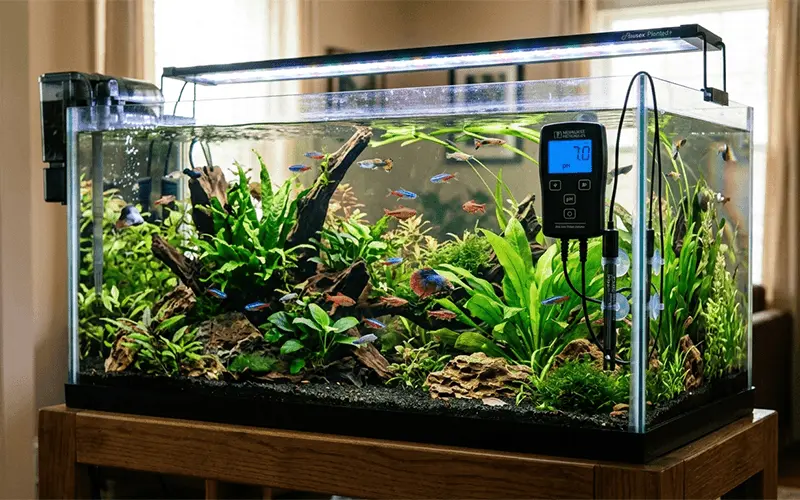
Maintaining proper water chemistry is essential for a healthy marine aquarium. One of the most important parameters is the pH level, which measures how acidic or alkaline the water is. If the pH in a saltwater aquarium becomes too low, it can stress fish, damage corals, and disrupt the overall ecosystem.
In this detailed guide, you will learn how to raise pH in a saltwater aquarium safely, what causes low pH levels, and the best methods to keep your aquarium stable.
What Is the Ideal pH for a Saltwater Aquarium?
The natural ocean environment is slightly alkaline, and marine aquariums should mimic those conditions.
The recommended pH levels are:
-
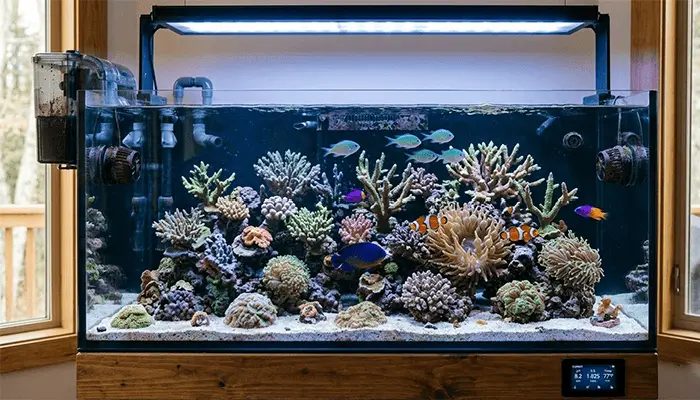
Fish-only saltwater aquariums: 8.0 – 8.3
-
Reef aquariums: 8.1 – 8.4
-
Coral reef systems: 8.2 – 8.4
If the pH drops below 7.8, it can lead to stress, poor coral growth, and weakened immune systems in fish.
What Causes Low pH in a Saltwater Aquarium?
Before increasing the pH, it is important to understand what caused the drop. Several factors can lower the pH in marine tanks.
Excess Carbon Dioxide
Too much carbon dioxide (CO₂) in the aquarium water is one of the most common causes of low pH. This usually happens when there is poor ventilation in the room or insufficient aeration in the tank.
Poor Water Circulation
Limited water movement reduces oxygen exchange at the water surface, allowing CO₂ to accumulate and lower pH levels.
Overfeeding Fish
Uneaten food decomposes in the tank and produces acids that gradually decrease the pH.
Waste and Organic Matter
Fish waste, decaying plants, and other organic materials break down over time and acidify the water.
Lack of Water Changes
Old aquarium water can become acidic if regular water changes are not performed.
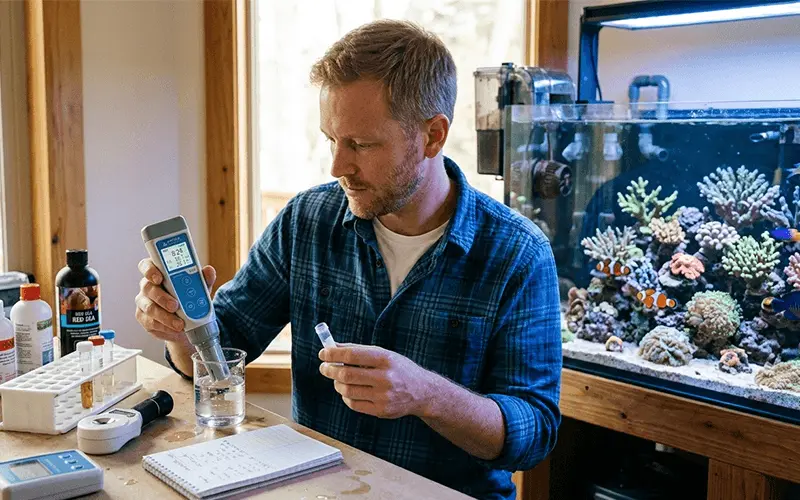
How to Test pH in a Saltwater Aquarium
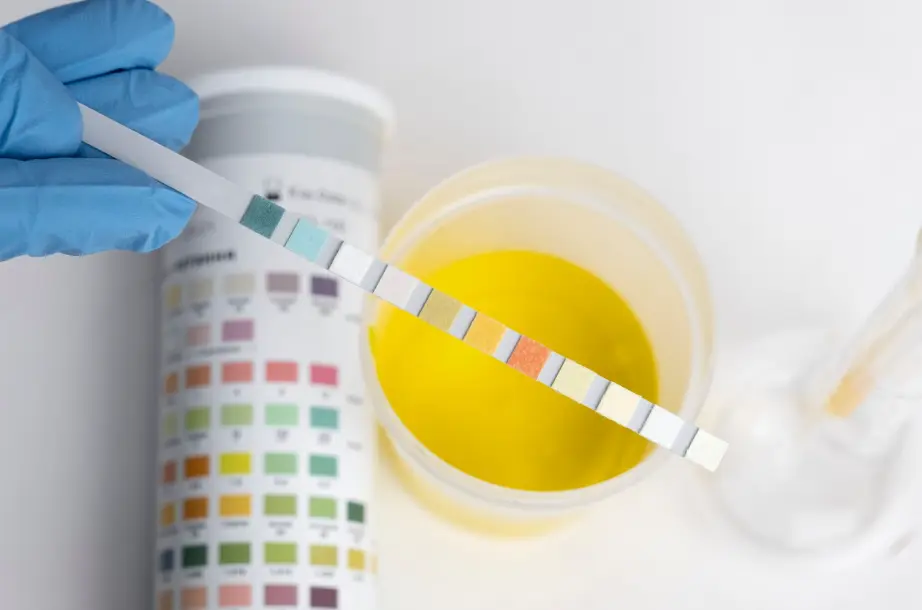
Before adjusting the pH, you should always test the aquarium water.
Common testing methods include:
-
Liquid aquarium test kits
-
Digital pH meters
-
Aquarium test strips
Testing should ideally be done at the same time every day because pH naturally fluctuates between day and night.
Best Ways to Raise pH in a Saltwater Aquarium
There are several safe and effective ways to increase the pH level in your marine tank.
1. Improve Aeration
Improving aeration is often the easiest way to raise pH. Increased oxygen exchange removes excess carbon dioxide from the water.
You can improve aeration by:
-
Directing powerheads toward the surface
-
Adding air pumps or air stones
-
Increasing water flow in the tank
Better gas exchange naturally stabilizes pH levels.
2. Perform Regular Water Changes
Partial water changes help replace acidic water with fresh saltwater that has balanced chemistry.
Best practices include:
-
Change 10–20% of aquarium water weekly
-
Use properly mixed marine saltwater
-
Match temperature and salinity before adding
This method improves overall water quality and stabilizes pH.
3. Use Marine Buffer Products
Commercial marine buffers are specifically designed to raise and stabilize pH levels.
Benefits include:
-
Fast pH adjustment
-
Improved alkalinity stability
-
Easy dosing instructions
However, buffers should always be added gradually to avoid sudden pH spikes that could harm aquarium life.
4. Increase Alkalinity
Alkalinity acts as a natural buffer that keeps pH stable. If alkalinity is too low, pH may fluctuate frequently.
You can increase alkalinity using:
-
Baking soda (carefully measured)
-
Kalkwasser solutions
The recommended alkalinity range for saltwater aquariums is 7–11 dKH.
5. Add Crushed Coral or Aragonite
Crushed coral and aragonite sand naturally release minerals that help stabilize pH.
They can be used:
-
As aquarium substrate
-
In filter media bags
-
In sump filtration systems
These materials slowly dissolve and act as a long-term natural buffer.
6. Use a Protein Skimmer
Protein skimmers remove organic waste before it decomposes and lowers the pH.
Benefits include:
-
Reduced organic waste
-
Improved oxygen levels
-
Better overall water chemistry
Many reef aquariums rely on protein skimmers for stable water conditions.
7. Reduce Organic Waste
Keeping your aquarium clean helps prevent pH drops.
Good maintenance habits include:
-
Avoid overfeeding fish
-
Remove uneaten food quickly
-
Clean filters regularly
-
Vacuum debris from the substrate
Proper maintenance prevents acid buildup in the aquarium.
How Fast Should You Raise pH?
Raising pH too quickly can stress fish and corals.
Experts recommend increasing pH no more than 0.2 units per day. Gradual adjustments help marine life adapt safely.
Always monitor the aquarium after making changes.
Signs Your Aquarium pH Is Too Low
Low pH levels can cause several visible problems in marine aquariums.
Common symptoms include:
-
Fish breathing rapidly
-
Coral polyps staying closed
-
Reduced coral growth
-
Increased algae growth
-
Fish appearing lethargic or stressed
If you notice these signs, test the water immediately.
Tips to Maintain Stable pH in a Saltwater Aquarium
The best way to avoid pH problems is through regular maintenance.
Helpful tips include:
-
Test aquarium water weekly
-
Maintain proper alkalinity levels
-
Perform regular water changes
-
Ensure proper tank aeration
-
Avoid overcrowding fish
A stable aquarium environment naturally maintains proper pH levels.
Frequently Asked Questions
What causes low pH in a saltwater aquarium?
Low pH in a saltwater aquarium is usually caused by excess carbon dioxide, poor water circulation, overfeeding, waste buildup, and lack of regular water changes. These factors increase acidity in the water and reduce the pH level.
What is the ideal pH level for a saltwater aquarium?
The ideal pH range for most saltwater aquariums is 8.1 to 8.4. Maintaining this range helps fish, corals, and other marine organisms stay healthy and grow properly.
How quickly should you raise pH in a saltwater aquarium?
You should raise pH slowly to avoid stressing fish and corals. Experts recommend increasing pH by no more than 0.2 units per day.
Can baking soda raise pH in a saltwater aquarium?
Yes, baking soda can raise alkalinity and slightly increase pH. However, it should be used carefully in small measured amounts to avoid sudden changes in water chemistry.
Do water changes help raise pH in a saltwater aquarium?
Yes. Performing regular water changes replaces acidic water with fresh saltwater that has balanced pH and alkalinity levels.
Does aeration increase aquarium pH?
Yes. Increasing aeration helps remove excess carbon dioxide from the water, which naturally raises and stabilizes pH levels.
Conclusion
Understanding how to raise pH in a saltwater aquarium is essential for maintaining a healthy marine ecosystem. Low pH levels are usually caused by excess carbon dioxide, organic waste buildup, or poor maintenance practices.
Fortunately, by improving aeration, performing regular water changes, maintaining alkalinity, and keeping the tank clean, you can easily restore and stabilize the pH level.
With consistent monitoring and proper care, your saltwater aquarium can provide a thriving environment for fish, corals, and other marine life.